
A fall can happen in a second and change a life for years. But working out who is legally responsible for the condition that caused the fall is rarely simple. Responsibility can sit with an owner, a tenant, a management company, a contractor, or the city itself, and sometimes with several of them at once. This guide explains how that responsibility is untangled.
The core idea: who controlled the property
A premises case turns on who owned, controlled or was responsible for the property where you fell, and whether they knew or should have known about the dangerous condition. The duty is to keep the property reasonably safe and to fix or warn about hazards within a reasonable time.
What counts as reasonable depends on the circumstances: the nature of the hazard, how long it had been there, whether the property owner had any system for inspecting and maintaining the area, and whether you were lawfully on the property. A spill that appeared moments before you slipped is treated very differently from a cracked step that has been there for months.
Owner, tenant, or both?
In a commercial building, the owner is not always the party responsible for the area where you fell. A lease can shift maintenance duties to a tenant, a management company or a cleaning contractor. Identifying who actually controlled the specific spot, the entrance, the stairwell, the loading dock, takes investigation, and it is not unusual for each party to point at the others.
This is why notice is so important. Building records, maintenance logs, prior complaints and inspection schedules can show who knew what, and when. That evidence tends to fade quickly, which is why early documentation matters.
When the responsible party is the city
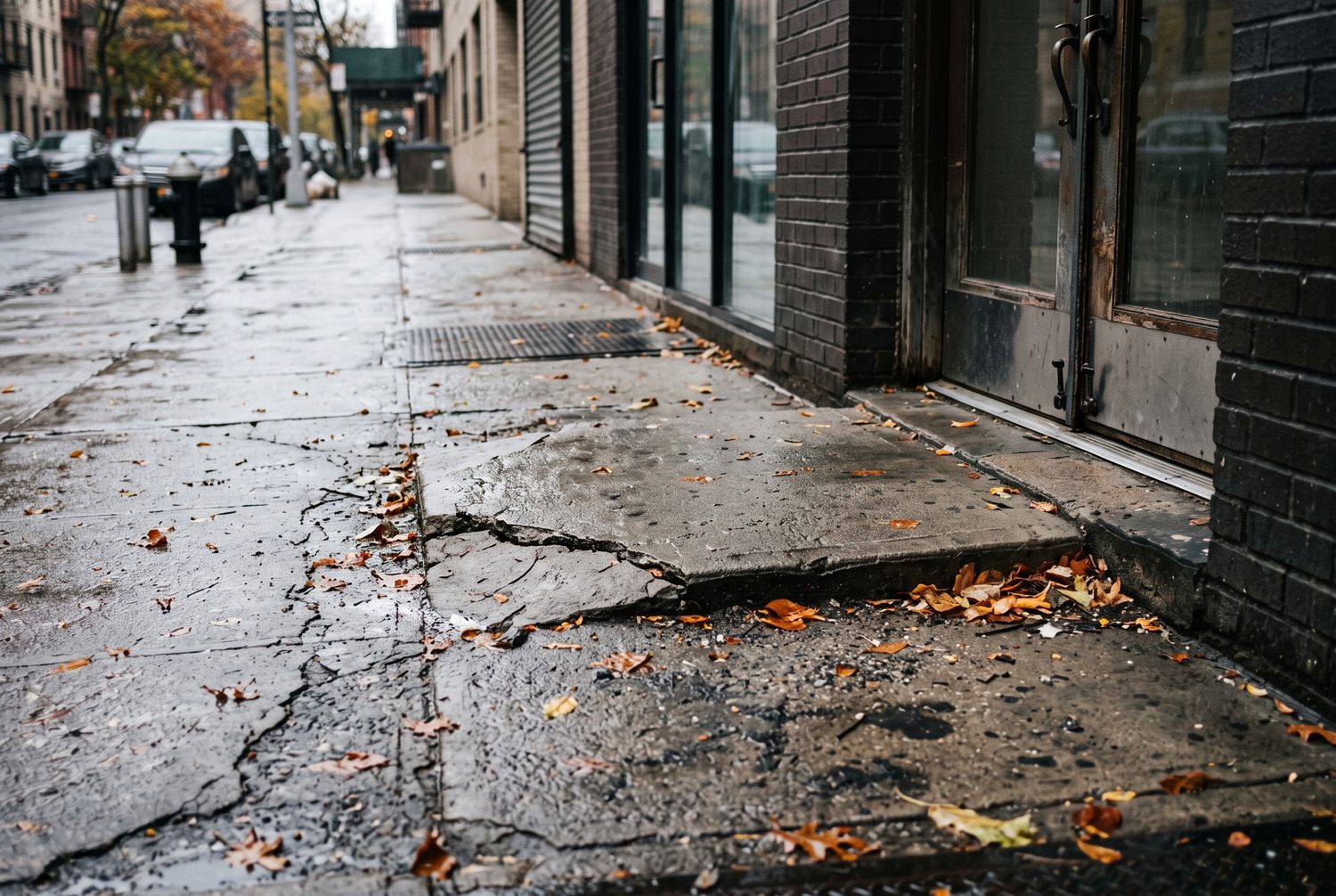
If you trip on a broken sidewalk or a defective street, the responsible party may be a municipal authority rather than a private owner. Claims against a city or a public authority carry their own notice requirements, which are far shorter than the deadline for a claim against a private defendant.
Deadlines are short and vary by the type of claim and who the defendant is, so speak to a lawyer quickly. A fall on a public sidewalk that is treated like a fall in a private lobby can be lost purely on the notice deadline.
What to do right after a fall
If you are able, photograph the exact condition that caused your fall before it is cleaned up, repaired or covered over: the wet floor, the uneven pavement, the missing handrail, the poor lighting. Note the exact address, the time, the weather, and anything that was unusual about the area. Ask for a manager or building representative and request that an incident report be created; ask for a copy.
If anyone saw the fall, get their name and contact details. Seek medical care promptly, and keep a record of every visit, image and referral. Do not give a recorded statement to the property owner's insurer before you have spoken to a lawyer.
The question of your own conduct
Be aware that the other side will look closely at what you were doing when you fell. Were you looking at your phone? Were you wearing footwear that contributed? Did you ignore a warning sign? Your own conduct can reduce a recovery, and in some situations can affect whether you can recover at all. This is not a reason to stay silent, but it is a reason to talk through the facts with a lawyer before describing them to an insurer.
Getting it untangled
A fall on someone else's property can support a strong claim, but only if the right party is identified, the right notice is given, and the evidence is preserved. If you have been hurt in a fall in New York or New Jersey, a free conversation with a lawyer at the firm can help you understand who may be responsible and what should happen next.
Hurt in a fall on someone else's property?
Speak to a lawyer at the firm today. The review is free and confidential.
Start your free case review