
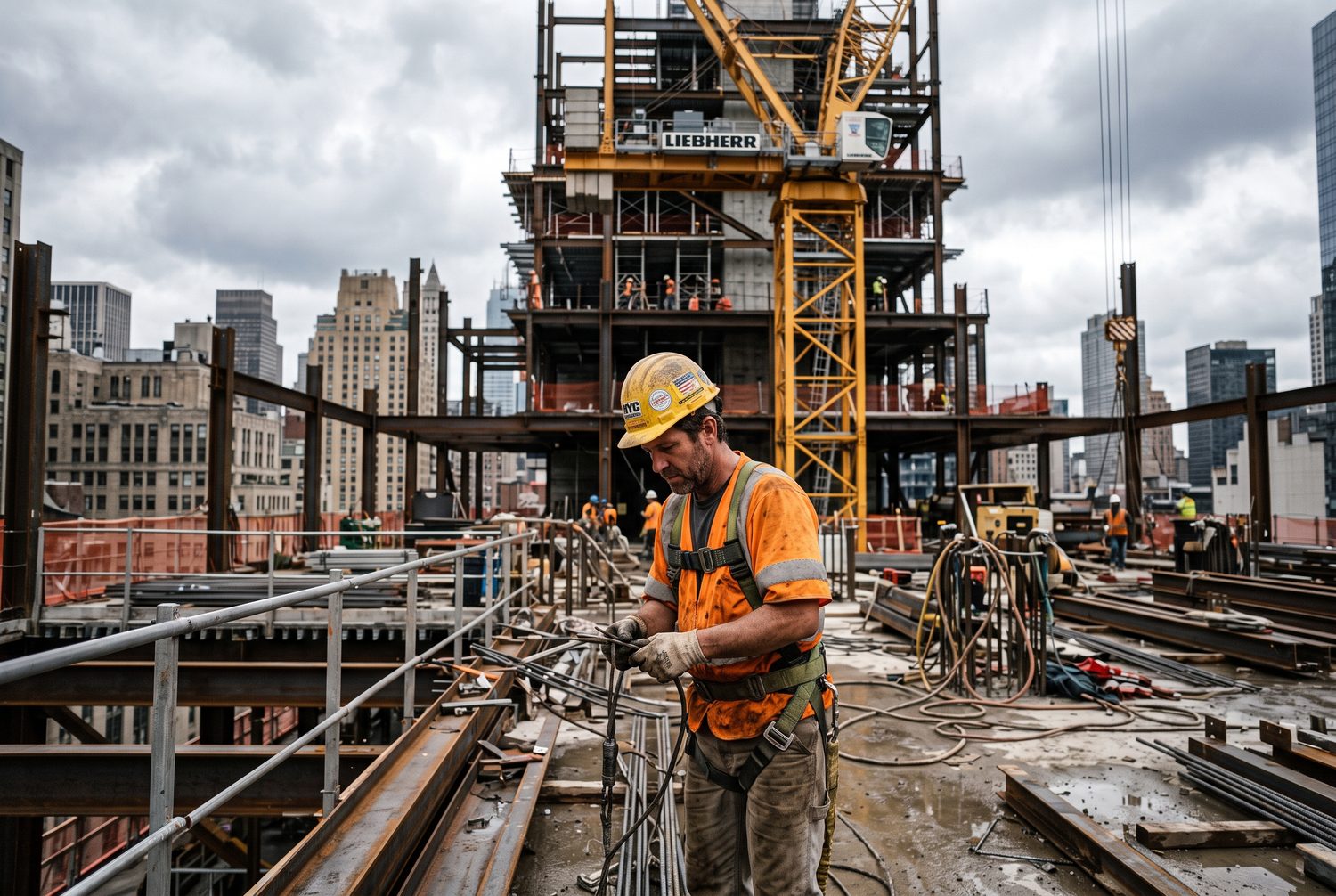
Construction is one of the most dangerous work there is, and falls from height account for a large share of the serious injuries on New York building sites. What sets New York apart from almost every other state is a century-old law that places responsibility for gravity-related injuries squarely on the parties who control the work site. This guide explains what that law does, in plain English.
What Labor Law 240 is, in plain terms
Section 240 of the New York Labor Law, often called the Scaffold Law, applies to workers who are injured by a fall or by an object falling from height on a construction, demolition or repair project. In short, it says that the owner and the general contractor have a non-delegable duty to provide proper safety devices to protect workers from elevation-related hazards.
The practical meaning of "non-delegable" is the most important thing to understand. An owner or general contractor cannot escape responsibility for a fall hazard by hiring a subcontractor or by relying on someone else to supply the safety equipment. The duty stays with them. This is fundamentally different from the workers' compensation system, where fault is usually not part of the question at all.
Who the law protects
The protection covers workers performing the type of work the statute covers, which broadly includes building, demolition, repair, cleaning and painting work that involves a height risk. It applies whether you are employed directly by the general contractor, by a sub of any tier, or by a specialist trade.
It does not cover every injury on a construction site. Injuries caused by a separate kind of hazard, such as a tool left in a walkway, may fall under a different section of the Labor Law or under ordinary negligence, and the analysis is different.
What counts as a violation
The core question is whether adequate safety devices were provided, and whether the absence or inadequacy of those devices was a cause of the injury. If a scaffold, harness, hoist, brace, ladder or other safety device was missing, defective, or simply not used, and a worker fell or was struck by a falling object as a result, that is typically the kind of situation the law addresses.
Comparative negligence arguments are limited in these cases. A worker's own conduct can reduce a recovery in some circumstances, but the duty to provide proper protection does not disappear because the worker was moving quickly or chose a faster route.
Workers' comp and a Labor Law case can run together
A worker injured on a New York site will generally have a workers' compensation claim, which pays medical care and a portion of lost wages regardless of fault. A Labor Law 240 case is separate: it is a personal injury claim brought against the owner and general contractor, who are not the employer, and it can pursue the full range of damages that a workers' compensation claim cannot reach.
How the two interact, and how any workers' compensation lien is handled in a later settlement, is one of the main reasons to involve a lawyer early. Deadlines are short and vary by the type of claim and who the defendant is, so speak to a lawyer quickly.
Why it matters who you call
Because the duty is non-delegable and the damages can be substantial, owners and their insurers fight these cases hard. The evidence on a construction site changes quickly: scaffolding comes down, safety plans are revised, and witnesses move to the next job. A prompt investigation can preserve the record before it disappears.
If you were hurt in a fall or by a falling object on a New York construction site, a free conversation with a lawyer at the firm can help you understand whether Labor Law 240 applies and what your options are.
Hurt on a construction site?
Speak to a lawyer at the firm today. The review is free and confidential.
Start your free case review